
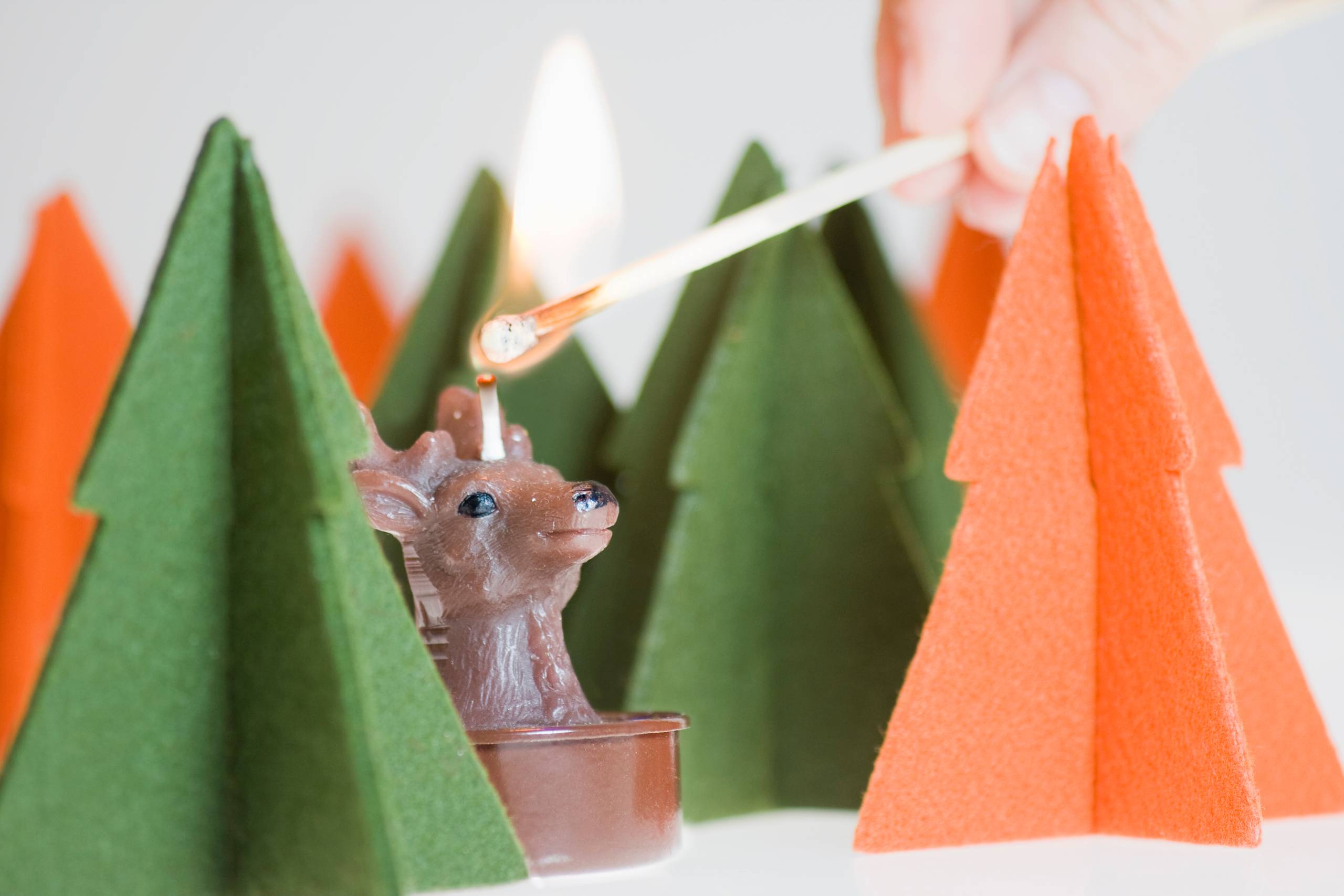
An ideal burn starts with a wick-to-wax ratio that’s just right. Too large of a wick can cause the wax to melt too quickly, creating a flame that’s higher than usual. On the flip side, a wick that’s too small won’t generate enough heat to adequately melt the wax, resulting in an equally weak flame. A correctly-sized wick will maintain a steady temperature of 1,800 degrees Fahrenheit (that is some hot wax!).
“The burn is everything,” one candlery manager told me. But wick strength and wax type are just two of many factors influencing the burn. If you visualize the burn as an engine, the wick is the driving force. It pulls the melted wax up via capillary action and the wax is the fuel that the flame consumes. Thus, the size of the wick will determine the size of the wax pool. A wax pool is considered “full” if it has reached the container’s edges after a few hours of burning. The wax pool should be just large enough to melt all the wax at the top of the candle. A candle with a wick that’s too small for the wax will create a burn pool that is too small, resulting in “tunneling.” This is when the wax down the center of the candle melts while leaving wax on the sides of the candle. Not only does this waste wax, but it also means the wax isn’t releasing the fragrance as effectively.
The wax composition also influences the melting point, viscosity, the molecular structure, etc. For example, soy wax (typically clean and pleasant to burn and a good wax for holding onto fragrances) has a lower melting point (around 120-135°F) making it a good choice for a beginner candle but it is a more temperature sensitive wax when pouring. Beeswax (typically, a hotter and clearer burn with a pleasant natural honey like fragrance) has a higher melting point and requires closer temperature control or it may frost or crack when cooling. Some manufacturers prefer paraffin (generally a good all-purpose wax which gives good hot throw) even though most craft soap and candle makers choose to avoid a petroleum based wax. A combination of the two (say, 90% soy and 10% paraffin) is a good compromise but that is one of the decisions you will have to make. The percentage mix can affect the hot throw and the burn quality.
The overarching theme of temperature control should not be surprising, given the importance of temperature in wax melting, wax cooling, frosting, and the overall quality of the finished candle. Wax heated to too high of a temperature can burn the fragrance oil, leading to a loss of the top note. Wax that is poured at too high of a temperature will sink in the middle when cooled. Wax that is poured at too low of a temperature will frost (more common with soy wax). Natural waxes should be poured between 135–185°F depending on the type of wax you’re using and what appearance you are aiming to achieve. A cooler temperature is best for a smoother finish, while a warmer temperature is better for an improved bond between the wax and any decorations or layered colors. Place the newly-made candles in a consistent room temperature for 48 hours to allow the wax to fully set and harden.
Lastly, there is the fragrance load and cure time. The fragrance has to be completely blended in, with no separation occurring as can happen with improper temperature or mixing. A good standard for this is 6-12% of the weight of the candle, any more and you can risk the oil sweating out or a bad burn. Once the candle has been poured, it must be allowed to cure for some time (typically 7-14 days) to allow the fragrance to fully incorporate with the wax, improving both the cold throw and hot throw. If you do not allow the candle to cure, you will have a very poor throw, and if you do you will be able to enjoy your candle with a far more consistent and widespread throw.
Understanding these principles makes candle making a fun game of chemistry. With each sample burn, you learn how a simple change in wick or wax or temperature gives you a better outcome. With enough practice, you can make educated guesses to fix problems, modify recipes for the summer, and make gorgeous candles that not only look lovely but burn nicely, have a long-lasting scent throw, and give you a sense of pride in making something wonderful.